A Guide to Doing Business with Ukrainians: Understanding the Culture. Part 1.
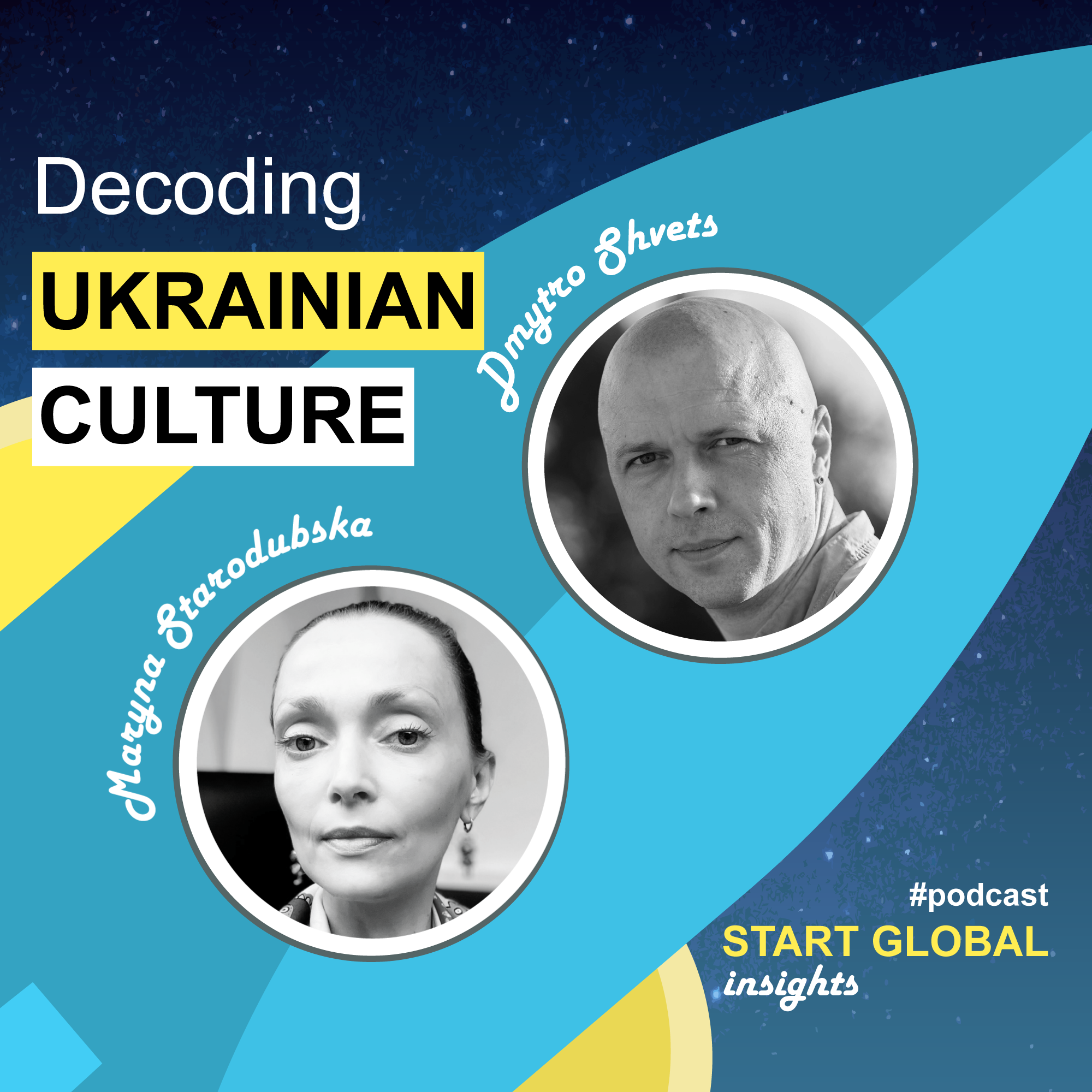
Episode 50. Start Global Insights – podcast for exporters.
Many international companies are looking at the Ukrainian market right now. However, to build a successful partnership, you need more than just a good business plan. You need to understand how Ukraine business culture works.
In a recent episode of the Start Global Insights podcast, host Dmytro Shvets spoke with expert Maryna Starodubska to explain the real identity and nuances of Ukraine culture in a professional setting.
Executive Summary: Key Takeaways
Trust: In Ukraine culture, trust is interpersonal, not institutional. It is “forged” through sincerity, not signed on paper.
Hierarchy: Respect for rank is high. Decision-makers must be present to signal serious intent.
Agility: A “frontier mindset” makes Ukrainians masters of short-term adaptation but skeptical of rigid 5-year plans.
Communication: “Big Talk” (sincerity) beats “Small Talk” (politeness). Be direct and authentic.
Listen to the full episode at Apple Podcasts, Spotify and YouTube Music.

Five Main Traits of Ukraine Business Culture
To understand a Ukrainian partner, you should know these five foundational pillars:
Highly Distrustful:
Ukrainians generally start with a high level of distrust. It takes significant time and effort to build a relationship. Without successfully establishing this trust first, the potential business cooperation may not progress.
Needs-Based Entrepreneurship:
Ukrainians are exceptionally adaptive, but this drive is born out of necessity rather than just finding new market opportunities. This type of entrepreneurship tends to boom during times of crisis and slows down when situations are stable.
High Power Distance and Uncertainty Avoidance:
Hierarchy and status are deeply respected. Ukrainians expect to negotiate directly with top-level decision-makers. They also dislike unpredictable situations and prefer taking immediate action over waiting or long-term planning.
Relationships Over Rules (Particularism):
Instead of applying general rules to everyone, Ukrainians focus on the specific person. The relationship always comes first, and the formal contract comes second as the final result of that bond.
Mixing Business and Personal Lives:
Professional and personal matters are not strictly separated. Personal loyalty is considered the most important part of a partnership. If there is a strong personal dislike between two people, it can completely stall a project.

Respect for Rank (Hierarchy)
Ukraine culture has a high “Power Distance” score. This means that status, rank, and decision-making authority are very important.
The Meeting Rule: If you want to signal that a deal is a priority, send your top leaders (CEOs or owners) to the meetings.
What to avoid: Sending a mid-level manager to meet with high-level Ukrainian executives. Rank consistency is vital; if the Ukrainian side is represented by senior leadership, the foreign side should be as well. A mismatch in rank can be interpreted as a lack of serious interest or even disrespect.
Trusting People, Not Systems
Historically, low trust in institutional systems (courts or government) has shaped Ukraine business culture. People trust specific individuals over the companies they represent.
Fast Replies: High uncertainty avoidance means partners may send several emails to ensure “everything is okay.” Quick communication helps bridge this trust gap.
Personal Safety: Ukrainians feel secure when they have a direct, reliable connection with a human partner who can solve problems personally.
Planning in a Fast-Moving World
Ukraine is often described as a “frontier culture.” People have learned to survive and thrive in a world that changes rapidly. This makes long-term planning difficult; statistics show many do not plan more than a few weeks ahead.
The Planning Hack: If you have a long-term goal, do not present a rigid 3-year plan. Instead, break it into short, visible steps with clear deadlines. Tangible results today build the trust needed for tomorrow.
From “Small Talk” to “Big Talk”
Forget “vodka diplomacy”, the idea that alcohol is the key to Ukraine culture is an outdated stereotype.
Be Sincere: Western “small talk” can feel insincere or like a waste of time to Ukrainians.
Big Talk: They prefer “Big Talk”, sharing values, personal history, or real business challenges.
The Contract: In the West, a contract starts the work. In Ukraine, the contract is the final result of trust.
How Ukrainians View Rules and Processes
Foreign partners are sometimes frustrated by a lack of strict “processes” or “SOPs” (Standard Operating Procedures).
The Reason: Historically, following rules too strictly could be dangerous or ineffective during crises. As Maryna Starodubska captures in this profound observation:
“Ukrainians have a very tumultuous and difficult relations with rules because throughout our history, those who follow the rules died, were killed. Those who trusted the government were killed. Those who trusted the system were killed. Abused, deported, whatever, put in concentration camps.”
This historical reality turned flexibility into a vital survival tool. In the Ukrainian context, being “process-driven” was often a liability, while being “results-driven” was a necessity for staying alive.
The Change: While they are adopting more formal structures as they grow globally, they still value the ability to pivot quickly over following a manual.
Simple Advice for Foreign Partners
To succeed in Ukraine business culture, treat these differences as “features” of the market:
Send Decision-Makers: Ensure the person in the room has the power to say “yes.”
Keep Your Team the Same: Ukrainians build trust with you, not your brand. Changing contacts resets the relationship.
Be Sincere: Directness gets respect. Do not hide problems behind polite language.
Stay Flexible: Value their speed and agility rather than trying to force a purely process-driven approach.
Summary: Building a Resilient Partnership
Success in the Ukrainian market requires a shift from “system-centric” to “people-centric” thinking. While Western business often relies on the safety of institutional rules and long-term roadmaps, Ukraine business culture is powered by interpersonal loyalty and short-term agility.
By prioritizing sincerity, engaging at the executive level, and allowing for flexibility in your planning, you can move past the role of a “foreign vendor” and become a “trusted ally.” In Ukraine, once that trust is forged, the resulting partnership is often far more resilient than any legal contract alone could guarantee.
Listen the full episode on all major podcast platforms like Apple Podcasts, Spotify and YouTube Music and others.