Mastering Complex B2B Sales Qualification: Stop Wasting Time on Leads That Won’t Close
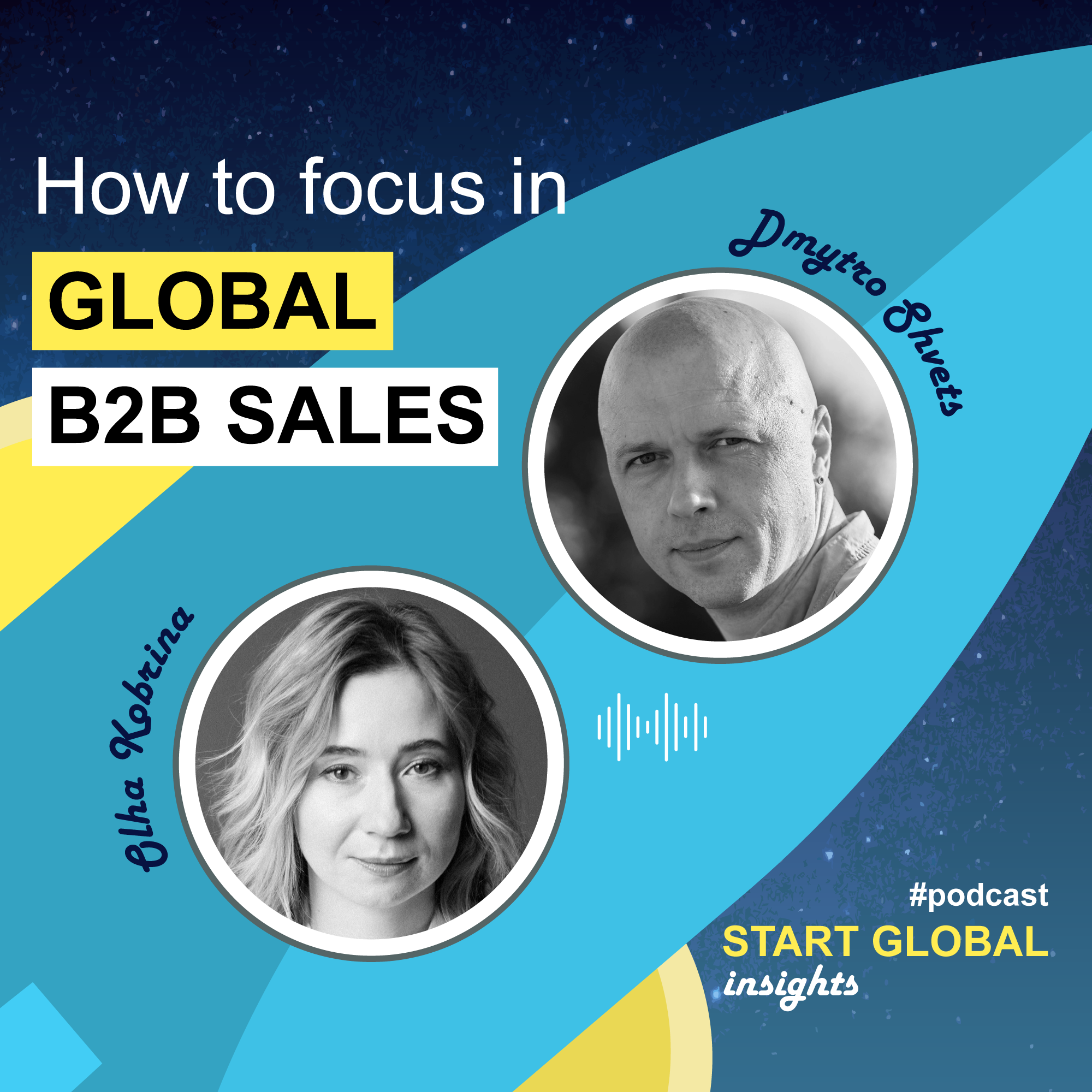
Episode 48. Start Global Insights – podcast for exporters.
In the world of international B2B sales, there is a dangerous motto that many teams unconsciously adopt: “It’s easy to be busy.” High activity levels—filling a CRM with leads, attending endless meetings, and answering every RFP—can create a false sense of progress. However, as Olha Kobrina, Channel Sales Manager for CEE at Splunk (a Cisco Company), explains in the latest episode of Start Global Insights, being busy is not the same as being productive.
The global market has an abundance of clients. It’s easy to be lost chasing all of them, but how do you understand which client is the most likely to be the one you will finally sell to? In this episode, we discussed the approach that will help you to focus and succeed. To thrive in complex global markets, sales professionals must transition from being mere “pitchmen” to acting like “intelligence agents” who prioritize leads based on deep qualification rather than surface-level interest.
Listen to the full episode at Apple Podcasts, Spotify and YouTube Music.

The Human Element: Leads are People, Not Companies
The first mistake many organizations make is treating a “lead” as a company or a generic role. In reality, a lead is a person with their own role descriptions, personal motivations, and internal pressures.
When a lead expresses “interest,” it is often a misleading signal. You must ask: Who on the customer side is interested? What is their authority? Why now? Without understanding the individual human driver behind the inquiry, you risk wasting months “satisfying a customer’s interest” without ever nearing a deal.

The MEDDPICC Health Check
To navigate these complexities, Olha advocates for the MEDDPICC methodology. Unlike a sales process, which tracks the steps toward a close, MEDDPICC is a qualification framework used to check the “health” and probability of a deal at every stage.
What is the MEDDPICC Sales Qualification Methodology?
Metrics:
The quantifiable value or financial implications your solution provides.
Economic Buyer:
The ultimate decision-maker with final financial authority; they can approve a deal when others object and veto it even if there is internal support.
Decision Criteria:
The specific requirements, technical standards, and benchmarks the buyer uses to evaluate solutions.
Decision Process:
The formal internal steps the buyer will take to move from evaluation to an actual purchase decision.
Paper Process:
The administrative, legal, and procurement path required to get a contract signed.
Identified Pain:
The core problem that needs solving and the actual cost to the company of doing nothing.
Champion:
The person with authority who sells on your behalf inside the company.
Competition:
Other suppliers or internal “do-it-yourself” initiatives competing for the same limited budget and attention.
How to identify the right champion?
Champion vs. Coach: The Critical Difference in B2B Deals
A true Champion is someone who is deeply invested in your solution because it solves their specific pain. They must have the internal authority to push the project forward.
It is vital to distinguish between a Champion and a Coach. A Coach is a valuable information source who can tell you how the company makes decisions, but they lack the power to influence the outcome. Relying on a single person is also a major risk; if your only advocate leaves the company, the deal often dies because you haven’t built a broader network of influence.
When is the Right Time to Ask for Budget in B2B Sales?
One of the most debated topics in sales is the timing of the budget conversation. Olha suggests that the timing depends on the strength of the qualified pain.
- Pain Creates Budget: A common misconception is that you can only sell to companies with a pre-existing budget. In reality, if the “Identified Pain” is severe enough and the financial implications are quantified, a company can and will allocate a budget even if one wasn’t in place from the beginning.
- Prioritize Pain Over Price: If the cost of the problem is higher than the cost of the solution, the Economic Buyer will find the funds.
- Early Qualification for Lead Filtering: While pain can create budget, it’s still wise to filter for reality. If a customer has a $20k mindset for a $200k problem, you need to recalibrate their understanding of the pain immediately or walk away.
- Ask the Right Person: The budget question is most effectively addressed with the Economic Buyer, not the technical lead.
More in this episode:
- The Modern Buyer Ecosystem: Navigating the collision of two universes—your complex product and the customer’s complex internal stakeholder web.
- Prioritization Without Burnout: Practical advice on managing dozens of marketing leads and partner registrations without losing focus on the high-value deals.
- Conscious vs. Unconscious Pain: Identifying if a customer’s pain is already at a conscious level (actively seeking a solution) or if it’s an unconscious bother that needs to be quantified and brought to the surface.
- Digging Deeper with “Why”: A look at why you must uncover the real business need behind a simple request (like “extra storage”) to avoid providing a solution that doesn’t actually solve the problem.
- The RFP Trap & AI Influence: How AI is changing proposal reviews and why rushing to answer an RFP without influencing decision criteria is a losing strategy.
Subscribe to The Start Global Insights podcasts
Don’t miss the opportunity to get insights about business cultures of different countries. Subscribe to the Start Global Insights podcast on all major platforms, like Apple Podcasts, Spotify and YouTube Music.
Conclusion: The Value of Walking Away
When a customer says a solution is “too expensive,” it is rarely about the price tag. It usually means they do not see the value or the salesperson has failed to quantify the pain. By using rigorous qualification like MEDDPICC, you can stop chasing poorly qualified deals and focus your energy on qualified opportunities that have a real path to closure. (You can also listen about how to prepare your alternative to negotiated agreement in another episode of Start Global Insights)